The Value of a “Complete Protein” in Plant-Based Food and Beverage Applications

There was a 34% increase in new product launches in 2024 that promoted a complete protein on the package, according to Innova Market Insights. In fact, the number of new products launched with the phrase “complete protein” on the package has increased every year since 2021. 
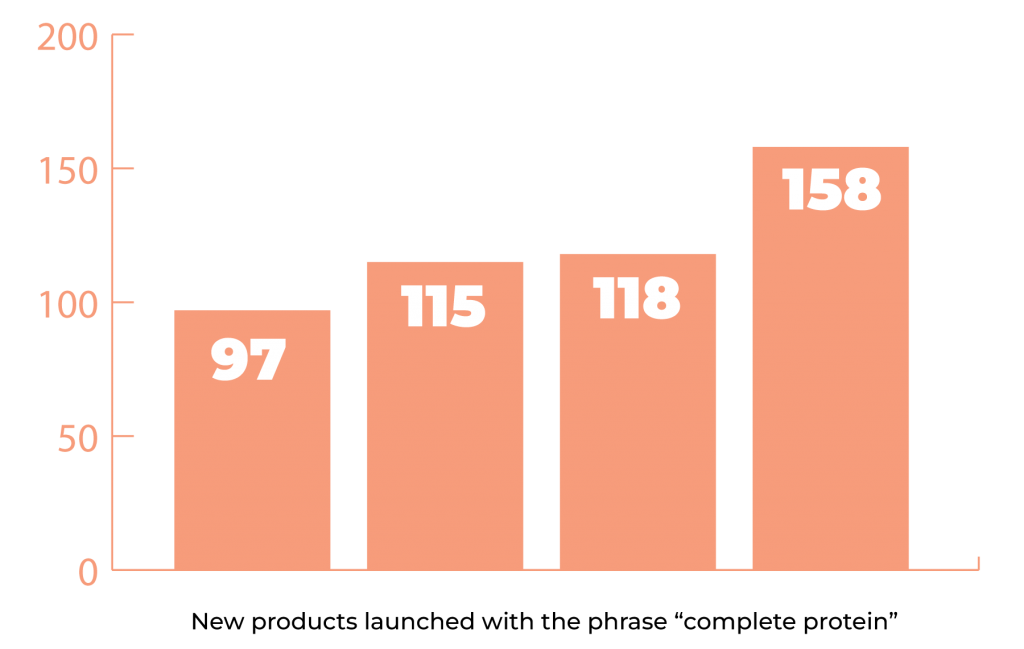
As protein demand increases, consumers are finally starting to understand the importance of a complete protein, and food brands are responding by formulating products with a complete protein profile. 

However, there is still confusion from consumers and food brands about what a complete protein profile is—and why it’s important. At Osage Food Products, we’re experts in formulating products with a complete protein profile, and we developed this Complete Protein FAQ to provide the food industry with insight into the importance of attaining a complete protein in food and beverage products.

What is a complete protein?

Simply put, not all proteins are created equal. The quality of the protein and the amino acid profile matters, not just the amount of protein that is added to a product. A complete protein contains all nine essential amino acids in the proportions your body needs for growth, repair and overall health. Essential amino acids are those your body cannot produce on its own, so they must be obtained through diet. 

Why is it important to have a complete protein in plant-based food and beverage products?

Complete proteins are vital for building and repairing tissues, supporting muscle development and maintaining a healthy immune system. For consumers seeking plant-based products, offering a complete protein ensures a product meets their nutritional needs, making it more appealing and functional. When using dairy products, obtaining a complete protein is easy. For plant-based products, it’s a bit more challenging.

Do plant proteins naturally contain all nine essential amino acids?

Most plant-based proteins, like rice, pea or hemp, lack one or more essential amino acids or have them in low amounts. For example, rice protein is low in lysine, while pea protein is lower in methionine. This contrasts with animal-based proteins, which are naturally complete.

How can I create a complete protein using plant-based ingredients?

Blending complementary plant proteins is the key to creating a complete protein. For instance, combining pea protein (rich in lysine) with rice protein (high in methionine) results in a complete amino acid profile. This synergistic approach balances the strengths and weaknesses of each protein source.

Are all blends equal in achieving a complete protein?

No, the ratio of proteins matters. To create a truly complete protein, it’s essential to use the right combination of sources in the right proportions. This ensures the final product aligns with the protein digestibility-corrected amino acid score (PDCAAS) or the digestible indispensable amino acid score (DIAAS).

What are PDCAAS and DIAAS?

PDCAAS measures the quality of a protein based on both its amino acid composition and its digestibility. It’s measured on a score of 0 to 1.0, with a score of 1.0 signifying that the protein source is complete and provides all essential amino acids in amounts sufficient to meet human needs, and it is highly digestible. Proteins with lower scores either lack certain essential amino acids or are less digestible. PDCAAS is also determined based on a specific age demographic and "reference standard" set by the Food and Drug Administration (FDA) and the World Health Organization (WHO). 

DIAAS is a newer method that considers individual amino acid digestibility in the entire digestive tract. However, it is more expensive than PDCAAS testing, so the food and beverage industries still use PDCAAS.

What are the PDCAAS scores for common plant proteins?

Two of the most popular plant proteins in the food industry today are pea protein and rice protein. Neither is a complete protein, with pea protein ranging from 0.6 to 0.8 and rice protein from 0.5 to 0.6. Although each protein is incomplete individually, blended, they form a complete protein. 

Can I promote that my food or beverage product has a complete protein profile on my packaging?

According to the Code of Federal Regulations (CFR), any time a front of package protein claim is made, like "complete protein," it has to be substantiated with a PDCAAS of 1.0 equivalency for the protein used in the product and reflected in the % daily value. For more information on labeling, read this information from Trustwell.

Do different blends of plant proteins work with different applications? 

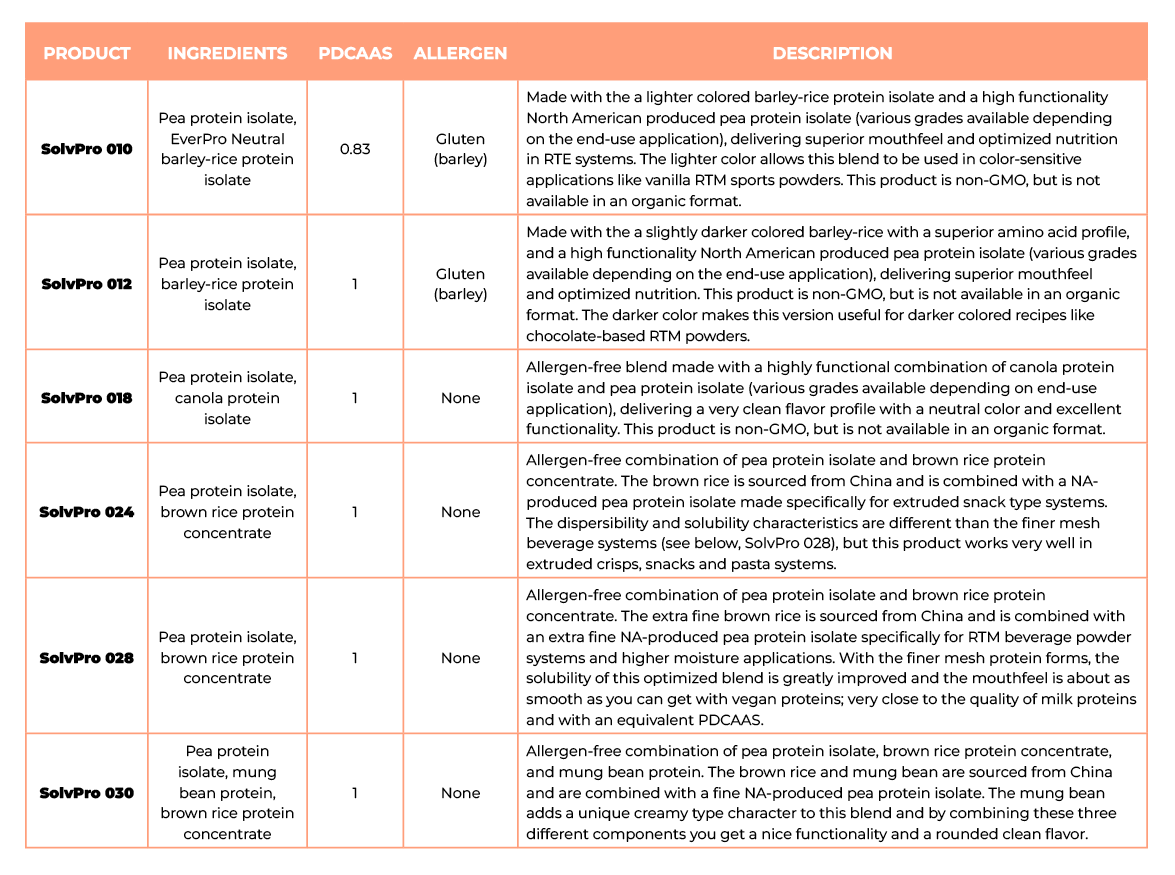
Yes! Osage Food Products’ SolvPro® line consists of plant protein blends optimized for functionality and nutritional properties in a variety of applications. We also employ masking agent technologies and speciality texturizers to optimize the blends’ flavor profiles and mouthfeels in a finished product. Each of these blends is complete, with a PDCAAS of 1.0. 
I’m sold on the importance of formulating products with a complete protein. How do I get started? 

Osage Food Product’s team of protein specialists would love to chat about your application and product attribute requirements. Contact us here or call (636) 390-9477.
Flavoring the Trend: Healthy Snacking

Millions of words have been published about the “snackification” of the American consumer. Essentially, everyone snacks, everyone snacks multiple times a day and snacking has even encroached on meal time, often acting as a convenient replacement. The snack category has responded to this eating evolution by offering more healthy snacks to balance indulgent favorites.

Bean-flour chips sit on shelves next to potato chips. Healthy seaweed snacks are supplementing pretzels for a more nutritious option. And, nuts and seeds have thrived on their nutritious and indulgent attributes.

Creating healthy snacks is easy, creating great-tasting healthy snacks is quite the challenge, especially when non-traditional base ingredients are used, such as bean flours or gluten-free flours. That’s where Osage Flavors comes in. We develop flavor systems that make healthy snacks taste as great as their indulgent counterparts. 

When looking at the work we’re doing in the healthy snacking market, these three categories stand out for opportunities:

When developing a flavor system for healthy snack, focus on flavor solutions with a health halo, such as these three flavor platforms:

Need help flavoring your healthy snacks? Contact Osage Flavors and we’ll send you samples and help you launch an innovative product. 

Overcoming Formulation Challenges when Working with Plant Proteins

Plant proteins operate differently than dairy proteins, and formulating with plant protein ingredients can pose challenges. Here are the main things that your R&D team should be focused on when selecting plant protein blends and formulating with these ingredients.

Solubility and Dispersion

Some plant proteins have poor solubility or dispersion properties, which can lead to issues with texture, product uniformity and stability. Formulators may need to experiment with different processing methods, emulsifiers, stabilizers and pH adjustments to improve the solubility and dispersion of plant-based proteins in food and beverage applications. It’s also important to choose the best type and mesh size of each protein component.

Texture and Mouthfeel

Plant proteins often have different textures and mouthfeels compared to animal proteins. Due to some of the insoluble matter that comes along with the protein isolation, they may be gritty, chalky or have a beany taste or off flavor that can be undesirable to consumers. Formulators need to work to optimize the texture and mouthfeel of products containing plant- based proteins through ingredient selection, processing techniques, formulation adjustments and flavor systems.

Flavor Profile

Plant proteins can have strong flavors or off-flavors that need to be masked or balanced in finished products. Formulators must carefully select flavoring agents and ingredients that complement or neutralize the taste of plant proteins without overpowering the overall flavor profile of the product. Given this challenge, the SolvPro™ team also leverages its expertise in flavor masking technology to offer a flavor optimized version of each of the SolvPro systems (when applicable and desired).

Allergen Considerations

Many plant proteins, such as soy, wheat and nuts, are common allergens that can pose challenges for consumers with food allergies or sensitivities. Formulators need to carefully label products containing allergenic ingredients and take precautions to prevent cross-contamination during manufacturing to ensure product safety.

Nutritional Profile

Plant proteins vary in their nutritional composition and amino acid profiles compared to animal-based proteins. Formulators need to consider the nutritional requirements of the target consumer market and ensure that products containing plant proteins provide adequate protein content and essential amino acids for optimal nutrition.

Cost and Supply Chain Considerations

Some plant proteins may be more expensive or less readily available than traditional animal-based proteins, depending on factors such as crop yields, processing methods and market demand. Formulators need to consider the cost and availability of plant protein ingredients and explore opportunities for sourcing partnerships, supply chain optimization and ingredient substitution to manage costs and ensure product availability.

Overall, plant proteins can be challenging to work with.

A collaboration between food scientists, product developers and ingredient suppliers is essential to overcome formulation challenges and create successful product applications with desired protein levels. There is also a very wide range of quality across the global supply chain and various suppliers of plant proteins, so finding a high quality source with consistent product quality is a key challenge.

For guidance in solving your plant protein formulation challenges, contact our SolvPro team. 

Formulating Plant Protein Blends for Specific Applications

Our SolvPro® team of experts is experienced in blending plant proteins for food and beverage manufacturers. It’s how we create complete plant protein systems. It’s also a great way to reach a color, flavor and functionality profile that is optimized for specific applications.

There are two areas a product developer should think about as they evaluate what blended protein systems work best in a formula.

Nutritional Considerations: What macro and micro nutrient targets are you trying to hit?

Sensory Considerations: What’s the product application, usage level and impact on key sensory attributes listed below?

Market Considerations: Is the protein blend readily available and will it meet the cost targets for a specific product

Osage Food Products’ SolvPro® team has developed many optimized plant protein blends designed for easy incorporation into a variety of applications. One of our most popular is SolvPro 012, which is a pea protein isolate/barley-rice protein isolate blend that has a PDCAAS score of 1.00. A couple interesting notes on this blend:

The blend is fantastic for most applications, but it has a slightly darker color and contains barley gluten, so it may be inappropriate for some applications that require a lighter color and gluten free claims. It also may not be ideal for extruded snacks due to its high solubility characteristics.

For an extruded snack protein blend, our SolvPro024 is a blend of a functionally larger mesh pea protein isolate and brown rice protein concentrate that are designed specifically for bakery and extruded snack systems yet still delivers a complete protein and a PDCAAS of 1.0. Plus, it’s allergen-free so it can be used in allergen-free products.

Want more information on our blends? Contact us and we’ll send you a list. 

Everything You Wanted to Know about Protein Quality and PDCAAS

When it comes to protein, the number of grams per serving tells only half the story. As we mentioned above, many plant proteins are deficient in one or more essential amino acids. For example:

Sourcing one plant protein for a formula is most likely not going to deliver a high quality optimal protein. In most cases, you have to use a blend of plant proteins to achieve a complete, quality protein.

The food industry measures the quality of a protein by its PDCAAS score. PDCAAS stands for Protein Digestibility Corrected Amino Acid Score, and it measures the quality of dietary proteins based on their amino acid composition and digestibility (and thus bioavailability).

The PDCAAS was developed in 1991 by the Food and Agriculture Organization (FAO) of the United Nations in collaboration with the World Health Organization (WHO). The development of the PDCAAS was a significant advancement in the field of nutrition and food science, providing a standardized and widely accepted method for evaluating and comparing protein quality across different protein sources.

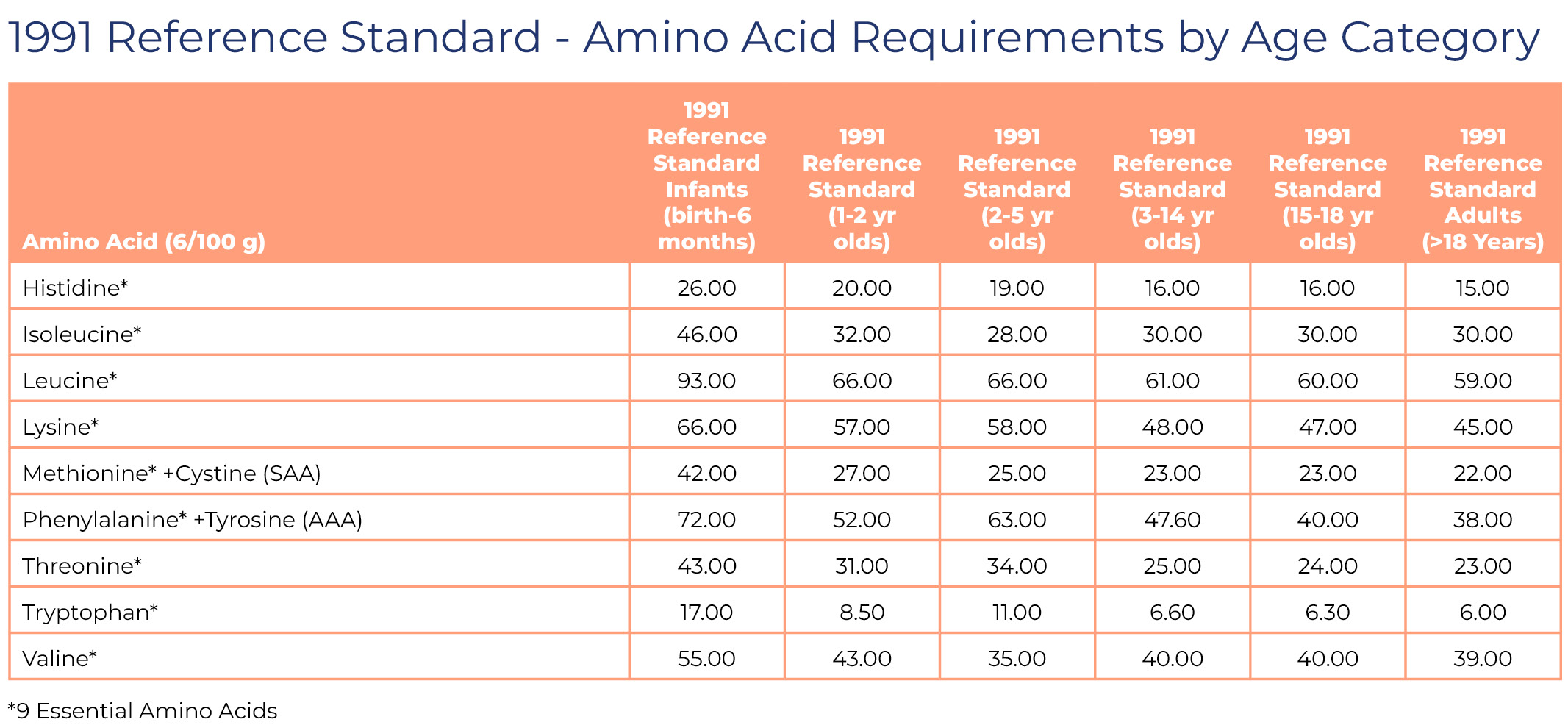
Since amino acid requirements differ for humans at different ages (see chart), there are different “reference standards” for various age groups that the FAO/WHO have developed and that the FDA and CFR use to determine the PDCAAS for a specific age group. The current FDA mandate is that the reference standard to be used for all protein claims made on food (other than for infants) is for the 2-5 year old category. 

Amino Acid Requirements

In dietary supplements, including most sports nutrition products, this mandate does not exist so the reference standard for the specific age category that the products are being developed for, and marketed to, can be used.

The PDCAAS takes into account two key factors:

A protein’s PDCAAS score is calculated by dividing the amino acid content of a protein by the amino acid content of a reference protein, typically the amino acid requirements of a 2- to 5-year-old child, and then multiplying by a digestibility factor. The resulting score ranges from 0 to 1, with 1 being the highest score possible.

Product developers use the PDCAAS to develop functional foods and dietary supplements that provide targeted nutritional benefits. By selecting protein sources with high PDCAAS scores and optimizing formulations for digestibility and bioavailability, companies can create products that support specific health goals, such as muscle recovery, weight management and athletic performance.

Need help understanding how to use quality proteins in food and beverage development? Contact our SolvPro® experts today. 

Animal Versus Plant Protein in Food and Beverage Product Development

It’s a never ending debate. What’s better: Animal proteins or plant proteins? It’s also a question that’s impossible to answer clearly. Oftentimes, it depends on who you ask! 

There are many (MANY) strong opinions about the nutritional profile and environmental impact of animal versus plant proteins. Those can be debated ad nauseam. However, there are a few definitive things we know. 

Animal proteins (meat, poultry, fish, eggs, dairy products, seafood) typically contain all nine essential amino acids in balanced proportions. Animal proteins are considered complete proteins. Plant proteins (legumes, nuts, seeds, grains, etc.) usually lack one or more essential amino acids. 

Additional differences include:

For food and beverage formulations targeting specific protein targets, dairy proteins are the gold standard. Whey protein is a complete protein, containing all nine essential amino acids. It’s easily digested and efficiently utilized by the body for protein synthesis and muscle repair.

Even better, whey protein is easy to add to a wide variety of food and beverage products, including protein bars, shakes, smoothies, baked goods, dairy products, sports drinks and nutritional supplements. Its neutral taste and excellent solubility make it easy to blend into various formulations without altering the flavor or texture significantly.

Whey protein also offers functional properties that improve the texture, mouthfeel and stability of food and beverage products. It can enhance viscosity, water-binding capacity, emulsification, foaming and gelation properties.

Whey protein’s main drawback comes from a growing population of vegan consumers. If you’re a vegan, you’re going to have concerns with consuming products with whey protein. There also are some potential allergen concerns with whey protein being a dairy-based milk allergen, which is one of the Food & Drug Administration’s top nine allergens that have to be declared and labeled on food products. 

These factors, along with growing environmental and sustainability concerns, have led many consumers to seek alternative protein options, with plant-based proteins having a very high amount of interest and activity in new product development efforts.

The challenging aspect of formulating with plant proteins is there are many, and generally must be blended to achieve nutritional and functional goals. 

Simply put, not all plant proteins are created equal, and it’s important for product developers to select a “quality” plant-based protein blend that delivers the nutritional benefits consumers desire while still being functionally usable in product formulations.

Where does a product developer get started? Contact our SolvPro® team for all your plant protein needs!

25 Years of Ingredient Solutions, Legendary Customer Service and Fun!

Happy birthday to us! We’re thrilled to be celebrating the 25th anniversary of Osage Food Products in May 2024. That’s 25 years of ingredient solutions and outstanding service to our partners in the food, beverage and nutrition industry. 

It all started in 1999, when Bill Dickinson started the company in Washington, MIssouri, a small community about an hour west of St. Louis. At the onset of our business, Bill and his small team were focused on ingredient trading, offering buy and resell services along with inventory management expertise.

As the business grew, so did our team and services, and we quickly became a full-service ingredient solutions provider with a clear vision: To be the gold standard in food and nutritional ingredients. By 2008, we surpassed $25 million in sales. Our quick growth was attributable to our expertise and guiding principles:

The “personal touch” sets Osage Food Products apart. To this day, we still answer our phones and prefer talking to our partners to ensure their needs are met. It’s one of the reasons we were named Fonterra’s authorized reseller in North America in 2015. 

2015 was also the year we launched Osage Flavors as part of the Osage family of companies. Osage Flavors combines tradition, innovation and experience to deliver a wide selection of flavors for any application. Our team of flavorists craft innovative, flavorful creations with production facilities located in both Salt Lake City, Utah, and Montreal, Quebec.

The launch of Osage Flavors was a transformational moment for our company, as we started focusing more on branded products. In 2019 we launched branded dairy products and in 2022 we launched three branded lines:

With a full slate of branded ingredient solutions, and custom sourcing and inventory management services, Osage Food Products is positioned for success for the next 25 years. As we grow, we promise to never lose sight of our mission: To create value and solutions that help our business partners achieve their goals. 

We also promise to live daily by our values:

Here’s to 25 more years!

Why is Protein Important in New Product Development?

In the food and beverage industry, proteins serve various functional roles beyond their nutritional value. They contribute to the texture, mouthfeel and structural integrity of foods while also enhancing flavor and supporting product stability. As such, proteins are a key focus for food manufacturers seeking to create nutritious, appealing and innovative food and beverage products.

From a food science perspective, proteins are vital macronutrients composed of long chains of amino acids. These amino acids serve as the building blocks for various structures within the human body, including muscles, tissues, enzymes and hormones.

The nine essential amino acids are:

Proteins play critical roles in virtually every aspect of bodily function and health. For example:

Because the body cannot synthesize all the necessary amino acids required for protein synthesis, it relies on dietary sources to obtain essential amino acids. Thus, consuming an adequate amount of protein is vital for overall health, growth, development and maintenance of bodily functions.

The recommended daily intake of protein for humans varies depending on factors such as age, sex, body weight, level of physical activity and overall health status. According to the Dietary Guidelines for Americans, which are established by the U.S. Department of Agriculture (USDA) and the Department of Health and Human Services (HHS), the Recommended Dietary Allowance (RDA) for protein for adults is 0.36 grams of protein per pound of body weight per day. This means that a sedentary adult weighing 150 pounds would require about 55 grams of protein per day.

It’s important to note that these are general recommendations, and individual protein needs may vary. Athletes, individuals recovering from illness or injury, pregnant or lactating women and older adults have higher protein requirements.

Additionally, the distribution of protein intake throughout the day is also important for optimizing muscle protein synthesis and overall health. It’s often recommended to evenly distribute protein intake across meals and snacks rather than consuming a large amount of protein in one meal.

Want more information on proteins in food and beverage product development? Contact our SolvPro® team for plant protein questions, or our DairyPro experts for information on dairy proteins. 

SupplySide West 2023